
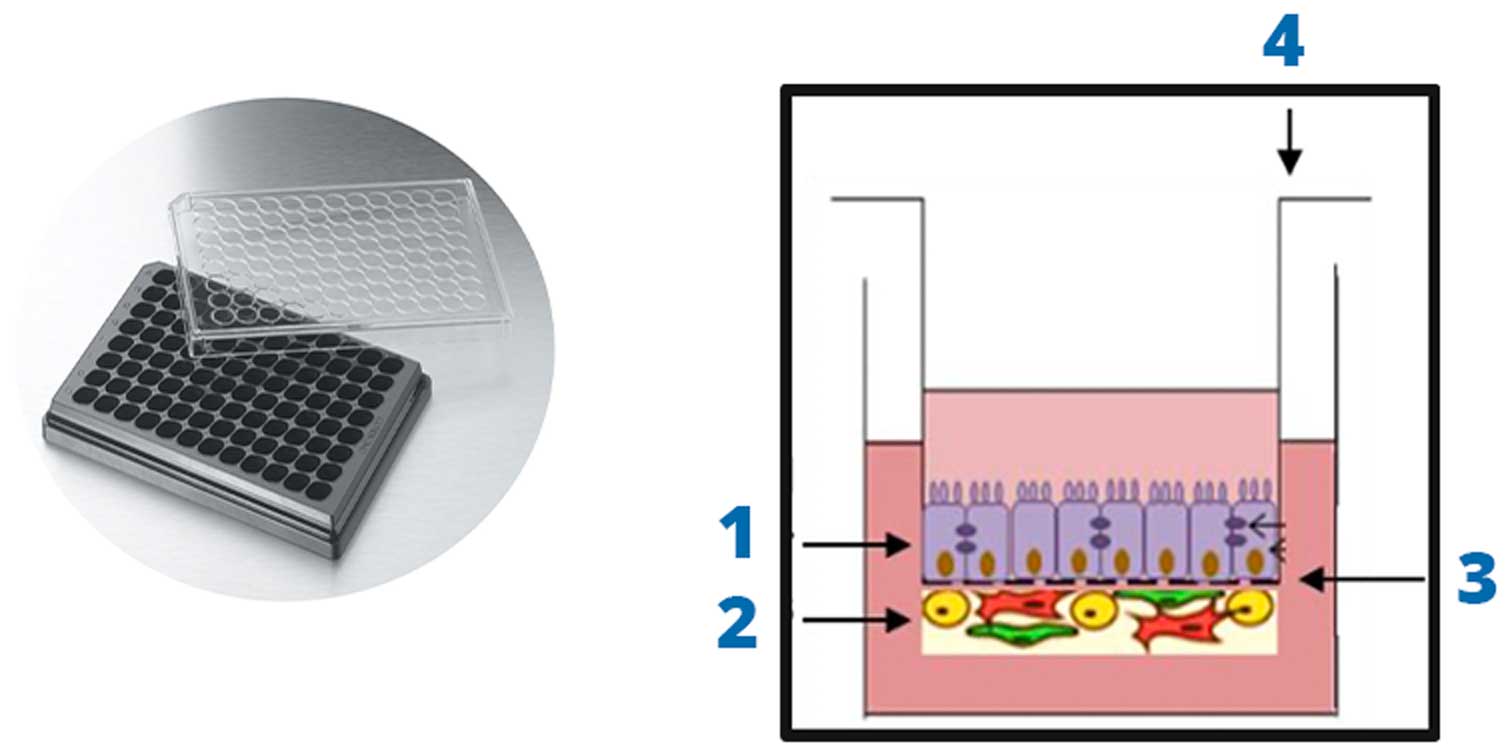
Traditional Caco-2 monolayer models fall short when predicting human-relevant intestinal toxicity, particularly for inflammation-driven responses like diarrhea. VivoSim’s NAMkind™ Intestine Model offers a breakthrough solution—combining physiological relevance with predictive power. Built on a 3D Transwell platform, the NAMkind™ Intestine Model incorporates both epithelial and stromal cells, enabling a more accurate recreation of native intestinal tissue and function. This advanced model allows for best-in-class diarrhea and inflammatory toxicity prediction, capturing key cytokine signaling that traditional models miss.

With integrated assays to measure epithelial barrier integrity (TEER) and differentiate between the viability of epithelial and stromal compartments, the NAMkind™ Intestine Model delivers a detailed and dynamic view of gut health under drug exposure, empowering researchers to make safer, more informed decisions earlier in development.

INTESTINAL TOXICITY TESTING FROM
OUR NAMkind INTESTINE MODEL

Fast. Cost-effective. Predictive.
vivosim-toxicity-test

1. Epithelial Cell Layer

2. Stromal Cells

  • Endothelial Cells
  • Smooth Muscle Cells
  • Transwell Insert

3. Permeable Membrane

4. Transwell Insert

Model Comparison

NAMkind™ Intestine Microfluidics
(e.g., Intestine-On-Chip)
Spheroid Caco-2 Monolayer
Barrier Function Cytotoxicity
Barrier Renewal Capacity
Low Permeability
Barrier Integrity (TEER)
Biological Relevance Multicellular
ECM interaction
Practical Considerations Throughput
Ease of use
Cost Effective
NAMkind™ Intestine
Barrier Function Cytotoxicity
Barrier Function Barrier Renewal Capacity
Barrier Function Low Permeability
Barrier Function Barrier Integrity (TEER)
NAMkind™ Intestine
Biological Relevance Multicellular
Barrier Function ECM interaction
NAMkind™ Intestine
Practical Considerations Throughput
Practical Considerations Ease of use
Practical Considerations Cost Effective
Microfluidics
(e.g., Intestine-On-Chip)
Barrier Function Cytotoxicity
Barrier Function Barrier Renewal Capacity
Barrier Function Low Permeability
Barrier Function Barrier Integrity (TEER)
Microfluidics
(e.g., Intestine-On-Chip)
Biological Relevance Multicellular
Barrier Function ECM interaction
Microfluidics
(e.g., Intestine-On-Chip)
Practical Considerations Throughput
Practical Considerations Ease of use
Practical Considerations Cost Effective
Spheroid
Barrier Function Cytotoxicity
Barrier Function Barrier Renewal Capacity
Barrier Function Low Permeability
Barrier Function Barrier Integrity (TEER)
Spheroid
Biological Relevance Multicellular
Barrier Function ECM interaction
Spheroid
Practical Considerations Throughput
Practical Considerations Ease of use
Practical Considerations Cost Effective
Caco-2 Monolayer
Barrier Function Cytotoxicity
Barrier Function Barrier Renewal Capacity
Barrier Function Low Permeability
Barrier Function Barrier Integrity (TEER)
Caco-2 Monolayer
Biological Relevance Multicellular
Barrier Function ECM interaction
Caco-2 Monolayer
Practical Considerations Throughput
Practical Considerations Ease of use
Practical Considerations Cost Effective

Request Intestine Model Case Study and Data Report

Please fill out form to download intestine model case study

Publications

October, 2025

Bioprinted 3D Primary Human Intestinal Tissues Model Aspects of Native Physiology and ADME/Tox Functions

Madden LR, Nguyen TV, Garcia‑Mojica S, et al. iScience. 2018;2:156–167. doi: 10.1016/j.isci.2018.03.015

Read more »

October, 2025

Development of a Multicellular 3D Intestinal Model Using Human Primary Cells to Identify Novel IBD Therapies

Gervacio S, Dudum R, Aidnick H, et al. Digestive Disease Week 2025, Abstract No. Tu2035

Read more »

October, 2025

Identification of JAK Inhibitors as Potential Therapeutics for Inflammatory Bowel Disease Using Human Primary Cell 3D Models of Crohn’s Disease and Ulcerative Colitis

Dudum R, Payton O, Toohey C, et al. Digestive Disease Week 2025, Abstract No. Tu2040

Read more »

FDA Alignment

Aligned with FDA’s New Approach Methodology (NAM) Framework
Our GI toxicity services are fully aligned with the FDA’s initiative to advance non-animal testing methods. NAMkind™ models are benchmarked against FDA and NIH reference compounds and adhere to performance criteria outlined in the Tox21 and NCATS collaborative frameworks for translational toxicology.

Our goal: Provide human-relevant intestinal data that meets the rigor of FDA expectations — supporting safer and faster drug development decisions.

VivoSim partners with pharmaceutical, biotech, and AI-driven drug discovery teams to modernize preclinical safety testing. By merging human primary cell biology, AI-powered analytics, and FDA-aligned NAM frameworks, we enable a more predictive, ethical, and efficient path to development